
Close
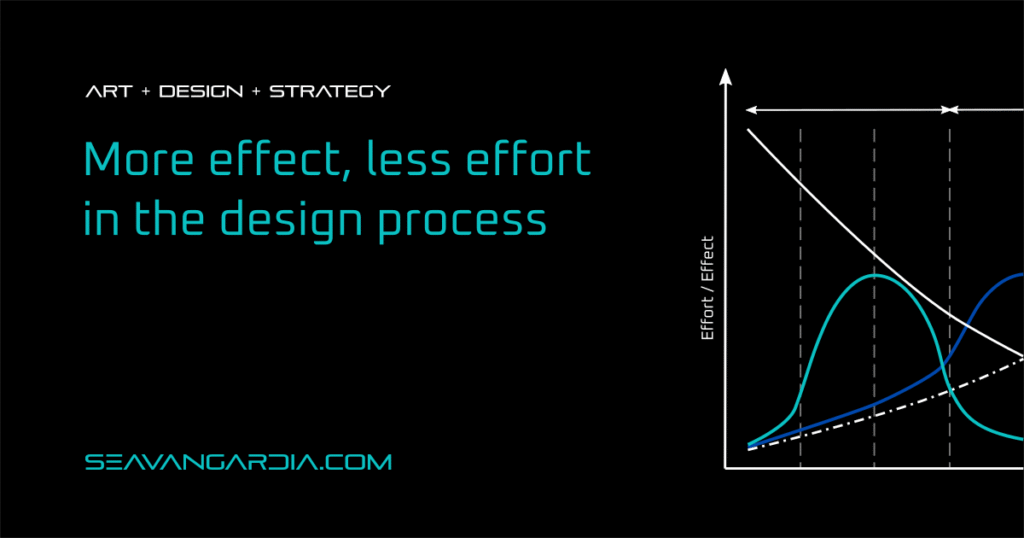
Shift resources from later phases to the initial phases of the project to gain more effect, less effort in the design process.
The concept was articulated by Patrick MacLeamy in 2004, a similar diagram was created by Boyd C. Paulson in 1976.
It derives from architecture and is used in integrative process frameworks, e.g. IPD and BIM. It shows the relationship between effect and effort on the design process timeline.
Likewise, it can be implemented in other industries, e.g., yacht design, automotive design, and ship design.
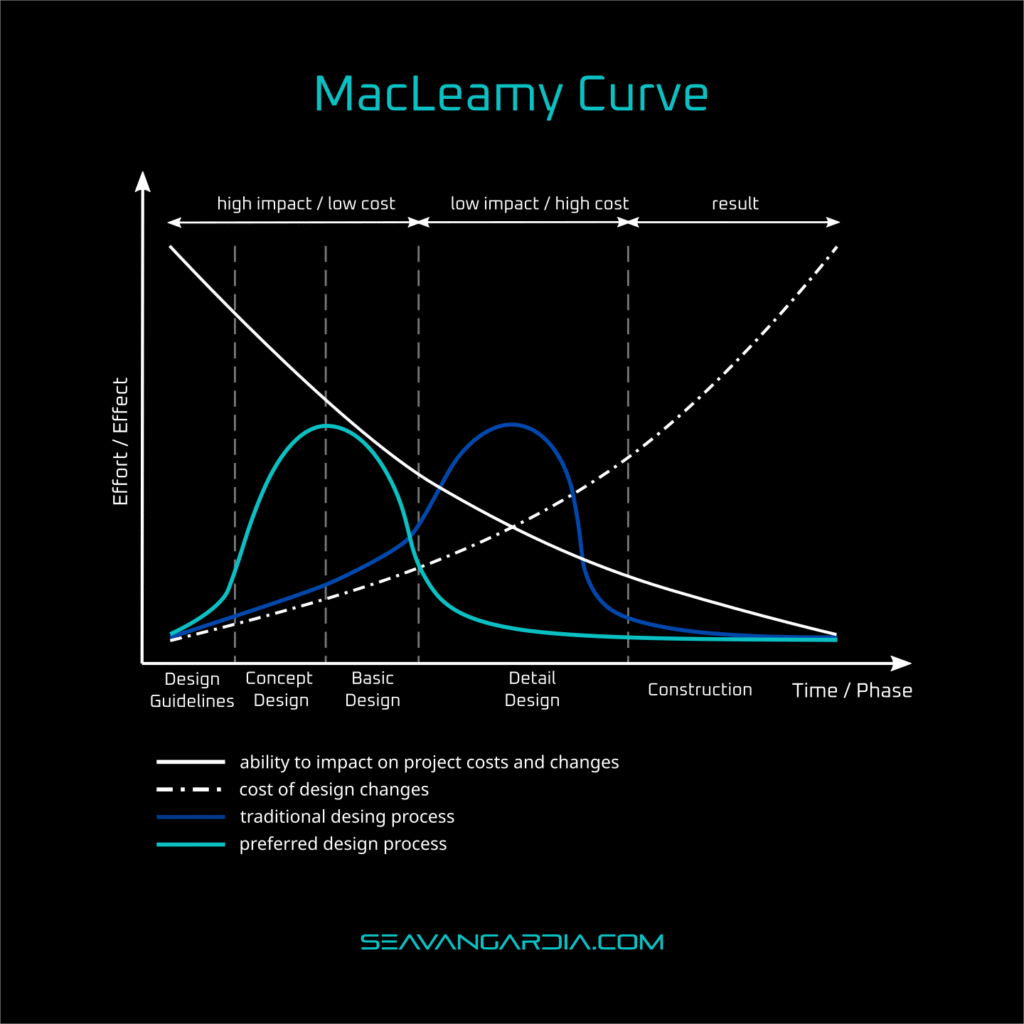
Designers focus most resources on the technical documentation phase of the project. At this point, changes are limited due to the exponential growth of costs.
Undefined and unresolved issues in the design development phase emerge at the implementation stage. They cause design corrections, which generate additional costs in terms of time and finances.
After submitting the documentation to the contractor, the designer loses significant control over the process. Contractors often try to save money by cutting the budget for materials and equipment, which leads to changes in orders, generates additional work and increases costs. This can cause conflicts between designers, contractors, and clients. Avoidance and transferring responsibility between project parties.
The more advanced the project, the less freedom in making design decisions and the more difficult it is to make changes.
The concept is about shifting the resources and effort from later phases to early design phases. You have more freedom to test ideas, and making changes is less expensive.
The initial phases have a key influence on the project.
The well-informed decisions made at the beginning of the design process minimize costs, errors, and optimize the final result.
You have to look broader at the context of the project. Prepare good guidelines from the client and analyze economic, and technical requirements. Gather and validate the quality of information from other parties of the project: designers, engineers, vendors, contractors etc.
It’s important to change the proportion of information in the scale of time and manage it well from the beginning. It’s crucial to establish ownership and authority for approval, so you can keep clarity of communication to avoid confusion or mistakes.
Decisions made early in the design process create high value with minimal effort.
The proactive, strategic approach to design and the modern methods and tools of computer-aided design can help you to achieve it. You can check many variants, iterate quickly, exchange ideas, and choose the best solution.
References:

I’m Aga, founder of Seavangardia. I’m a designer, naval architect, and entrepreneur. I love yoga, contemporary dance, swimming, diving, sailing, and traveling to different places – warm and cold. From the raw beauty of nature to big cities. Travels shaped my view of the world. I believe that design isn’t only about beauty and the creation of objects and spaces. It’s a strategic element of building a business with purpose.